About Me
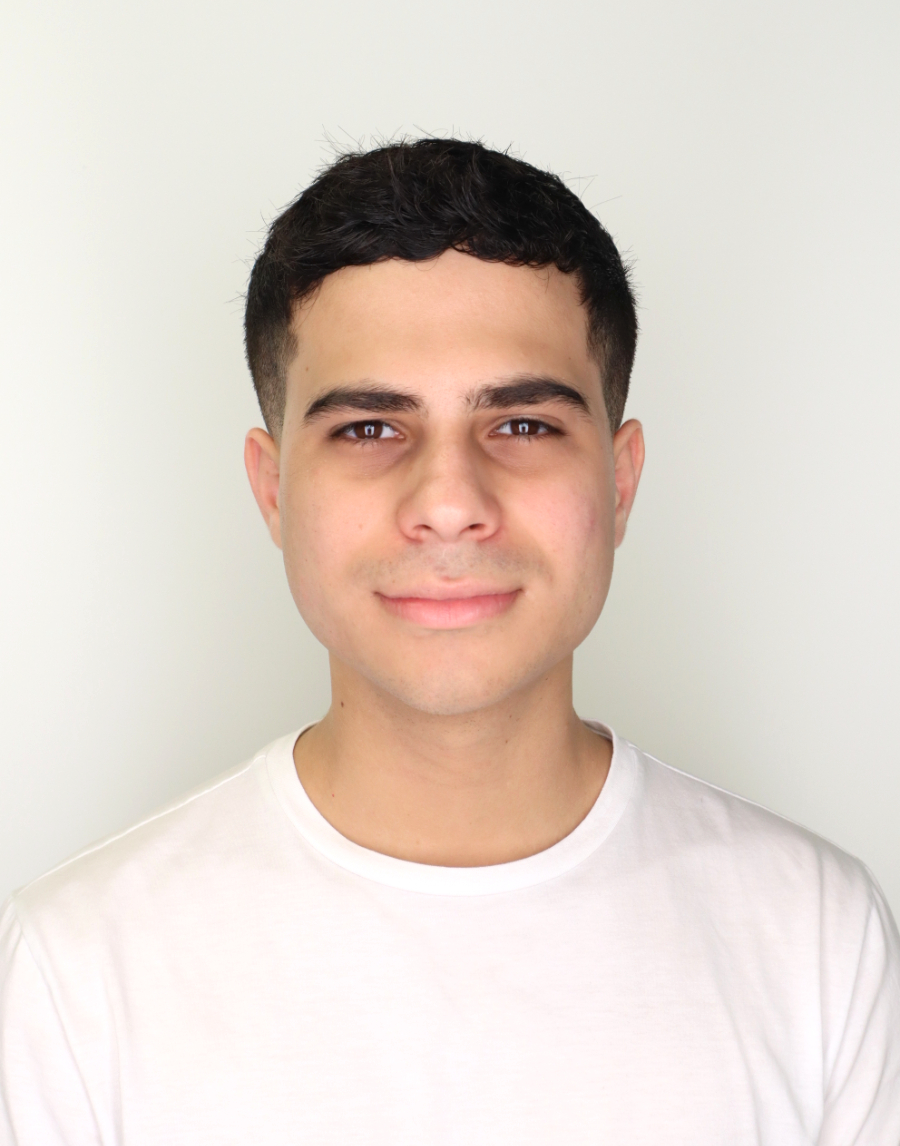
Hello! My name is Adrian Lozada, and I am a junior studying computer engineering at the University of South Florida (USF). I am passionate about artificial intelligence (AI) models and algorithms that improve human-robot interactions (HRI). My ultimate goal is to integrate robotics into society seamlessly, enhancing our daily lives and improving safety through innovative technology. I am currently working on a project that aims to develop a fog screen for robots, enabling them to communicate through spatial augmented reality (AR) in environments that do not have conventional projectable surfaces. This summer, I am excited to be part of the CRA-WP DREU program, where I hope to expand my research under the guidance of Dr. Zhao Han and explore new opportunities where technology can meet human needs.
About My Mentor
Zhao Han is an Assistant Professor of Computer Science and Engineering at the University of South Florida. He leads the Reality, Autonomy, and Robot Experience (RARE) Lab.
Dr. Han’s research lies broadly in human-robot interaction (HRI), augmented reality (AR), robotics, and AI. He focuses on designing, developing, and evaluating novel robotic systems and interactions, for embodied robots to be more capable and understandable while interacting, collaborating, and teaming up with humans.
To advance this work, Dr. Han takes an interdisciplinary and human-centered approach, developing broad expertise in robot explanations for trust, projector-based and head-worn AR for communication, mobile manipulation for real-world evaluation, cognitive status-informed references, robot failures for robustness, and more.
About My Project
This summer, I will be working on a project to develop a fog screen for robots, allowing them to communicate through spatial augmented reality (AR) in environments without conventional projectable surfaces. This project continues the work my lab partners and I began during the spring semester. We successfully designed and built a working prototype of the fog screen, which consists of a fog machine, eight fans, and a projector. The fog machine is mounted on the base of a Fetch robot. However, the fog screen machine had some flaws that needed addressing. The fog machine was not powerful enough to create a dense and lasting fog, and the projected image was unclear. We are working to improve the fog screen machine.
After closely examining the prototype, my lab partners and I hypothesized that modifying several design aspects could improve the fog screen machine. We thought that narrowing the fog nozzle would increase the density of the fog. We also believed that narrowing the fans’ output nozzles would increase the air pressure and improve the fog’s stability. We experimented to test these hypotheses and determined that there is a positive correlation between narrowing the fog nozzle and increasing the length of the usable fog – fog that we can project images onto.
Moreover, we believe that replacing the fog machine with a more powerful one would improve the fog screen machine. We also think that using more powerful fans would increase the air pressure and improve the fog’s stability.
We started designing a new housing for the fog screen machine. By the end of the summer, we expect to have a machine that can project clear images onto a dense and lasting fog screen. We plan to publish our research papers at the ICRA 2025 conference.